
DEPARTMENT MENU
Curriculum and Instruction
The Nicholls master’s degree programs in curriculum and instruction allow educators to advance their careers while mastering their skill areas. The Curriculum and Instruction Master’s degree includes five concentration areas in which candidates can specialize. These are as follows: Early Childhood Education, High Incidence Disabilities with Applied Behavior Analysis option, Reading Specialist, Elementary Education or Secondary Education. Further information is provided within each area of concentration.
Scholarship Opportunity
SR Education Group, an online education publisher, has developed a scholarship program specifically for education graduate candidates. The scholarship award is $5,000, and is awarded four times per year. Please visit the following website for more information and to apply. http://www.sreducationgroup.org/scholarships/graduate-scholarship-for-teachers
hold a baccalaureate or graduate degree from a regionally accredited college or university,
provide official transcripts showing all previous undergraduate and graduate work attempted (whether or not credit was earned),
submit a formal application to the Office of Admissions at least 30 days in advance of registration,
have a grade point average of at least 2.50 on all undergraduate work, or 2.75 on the last 60 hours
Concentrations
Early Childhood Education
The 39 credit hour fully accredited (CAEP) program is composed of professional research and the application of that research through developmentally appropriate field base practices and studies; professional leadership experiences; diverse virtual and on-site observations; and various opportunities to network/learn with and from other early childhood education professionals.
The coursework is offered through online delivery which incorporates
8-week and 16-week courses. Completion of the program is achieved
through 4 semesters of coursework at 6-9 hours and one summer
semester of coursework at 6 hours. All classes are completed online
allowing full-time educators the convenience of working at their own
pace and on their own timeline. With the completion of the Early
Intervention Praxis, candidates who graduate from this program may
opt to add-on Early Intervention Certification.
Helpful Links
Department of Teacher Education
For more information about the program, please reach out to Dr. Elizabeth Block at elizabeth.block@nicholls.edu or 985-448-4819. For assistance with application and registration, please reach out to Mrs. Wanda Porche at wanda.porche@nicholls.edu or 985-448-4331.
Optional Early Interventionist Education Add-On Certification is available with the completion of this graduate degree as well as the required Praxis exams. Contact Program Chair, Dr. Tiffany Papa, for additional information.
Why Pursue a Master’s in Early Childhood Education?
- Improve Student Outcomes
- Job Security
- Salary Increase
- New Job Opportunities
- Professional Development
- Leadership Perspective
- Early Interventionist Add-On Certification
Requirements
- Bachelor’s Degree
- Current Teaching Certificate
- 2.5 GPA or Higher
- GRE (waived for full- time teachers)
Job Opportunities:
- Preschool Director or Administrator
- Home-Based Service Provider or
- Early Childhood Special Education Mentor or Coordinator
- Early Childhood Consultant or Specialist
- Pre-K–3rd Mentor or Early Childhood Master Teacher
- Early Childhood or Early Interventionist Curriculum & Instruction Director
- Principal/Vice Principal of Early Childhood or Early Intervention Schools
- Early Childhood Education Grant Writer or Researcher
- University Instructor
Advisor Information
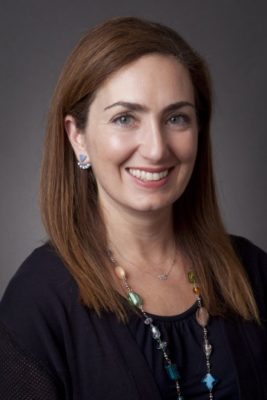
Dr. Elizabeth Block
Title: Professor; Teacher Education
Email: elizabeth.block@nicholls.edu
Phone: 985.448.4819
Office: 239 Dr. O Cleveland Hill Hall
High Incidence Disabilities
Keeping Students energized, interested, and involved in class and daily activities is a constant challenge for an educator. This is particularly true for those who work in inclusion classrooms, special education classrooms, or with diverse learners in alternative settings.
The High Incidence Disabilities concentration prepares educators and clinicians to implement instructional intervention strategies to reach students with diverse learning needs. The curriculum includes numerous hours in the field, including a supervised induvial practicum in special education. The program also focuses on assessment methods, behavior intervention, and inclusion classroom instruction.
The program in High Incidence Disabilities offers three options: 1) ABA Option, 2) Ed-Diagnostician Option, and 3) Special Education Option. Each of these options are available to individuals separately or in combination and are available both for individuals currently with or without a Master’s Degree.
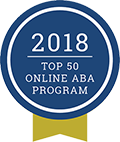
Nicholls State University has been formally recognized for its outstanding online ABA program and was selected as a Top 50 Online ABA Program in 2018.
Individuals pursuing the Applied Behavior Analysis (ABA) option will take the ABAI(r) approved verified course sequence (VCS). While the VCS sunsets as of December 31st, 2025, coursework for application to the BACB(r) will be attested to by the Program Coordinator under BACB(r) Pathway 2. Additionally, NSU is currently undergoing application for ABAI(r) Recognition and Approval. The course sequence is delivered through a combination of synchronous hybrid and WWW options. Please discuss these options with your program advisor to ensure successful completion of the program.
Individuals seeking the ABA option must also obtain 2,000 supervised field experience hours per the BACB(r) Pathway 2 Certification requirements. The field experience must be approved by the program committee, and supervision must come from a Board Certified Behavior Analyst (BCBA) approved by the program committee. Additionally, with appropriate supervision experience, it is possible to obtain Comprehensive Application of Behavior Analysis to Schooling CABAS(C) certification. We are the only program in the state and one of the few in the country to offer both certification options. The combination of coursework and supervised field experience allows the candidate to apply to take the BCBA(R) examination under Pathway 2 and may allow for application for CABAS(r) Teacher 1 certification and beyond. Upon obtaining the BCBA(R) credential, the candidate may then apply to become a Licensed Behavior Analyst.
The nexus of our ABA program options is using the applied science of the behavior of the individual as the basis of a science of individualized instruction. Thus, our ABA program option focuses on building academic, social, and verbal behavior repertoires, cusps, and capabilities of the individual. We emphasize that the principles, strategies, and tactics of behavioral science are central to: 1) effective pedagogy, 2) competent classroom management, and 3) sophisticated curriculum design/implementation.
The concepts, practices, and analytic strategies of behavioral science provide the novice or experienced teacher with the means to provide those educational outcomes for students and the community that are necessary for the well being of the student and society. Those who have mastered the content and applied it to practice with their students have made significant contributions to the welfare of their students, contributions that would not have been possible without the tools and strategies of the science.
Please note: Those individuals seeking the ABA option who are currently holding a valid master’s degree need only take the ABA approved course sequence + supervised practicum. Candidates without a master’s degree must take the High Incidence Disabilities Master’s program coursework + the ABA approved course sequence + supervised practicum.

Dr. Grant Gautreaux
Associate Professor of Education
118 Polk Hall
Phone: 985.448.4316
E-mail: grant.gautreaux@nicholls.edu

Dr. Derek Shanman
Assistant Professor
119 Polk Hall
Phone: 985.448.4319
E-mail: derek.shanman@nicholls.edu
Dr. Mary Breaud, Assistant Professor
244 Polk Hall
Phone: 985.448.4341
E-mail: mary.breaud@nicholls.edu
Dr. Dolleen-Day Keohane, Adjunct Professor
- Special Education Teacher – Work with special education students in self-contained or inclusion classrooms
- Special Education Liaison – Mentoring teachers and working with special education services district-wide
- Special Education Director/Supervisor – manage student evaluation centers and oversee special education services district-wide
- ABA Specialist – with ABA option
- Board Certified Behavior Analyst – with ABA Option and successful passage of the BCBA(r) exam
- Educational Diagnostician – with EDC certification
Click the links below for more information related to the High Incidence Disabilities program and related affiliations.
CABAS – www.cabasschools.org
LaBAA – www.labaa.net
BACB – www.bacb.com
ABAI – https://www.abainternational.org
Reading Specialist
Perhaps no academic skill is as crucial as reading. Reading specialists work with students through “learning to read programs,” insuring that they will be prepared for future classroom exercises that require “reading to learn.”
The reading concentration arms educators with the skills needed to implement effective reading programs, assess and correct reading disabilities and utilize innovative methods and materials to promote literacy in schools and communities.
The program requires a supervision and literacy coach practicum, requiring students to support the instructional and supervisory roles of a reading specialist in a school-based setting. During the final semester, candidates must also submit a comprehensive portfolio.
To be admitted into the Curriculum and Instruction program at Nicholls, applicants should possess the following:
- A bachelor’s degree or graduate degree from a regionally accredited institution.
- A minimum GPA of 2.50 on the final 60 hours of undergraduate coursework attempted.
- Three letters of recommendation.
- Interview with program emphasis area faculty.
- A valid permanent-type teacher’s certificate.
- 18-24 hours in professional education as appropriate for the level selected.
Reading Specialist curriculum guide (PDF)
- Literacy Coach/ Consultant – assist teachers with reading programs in educational settings
- Reading Interventionist – implement reading programs for children with delayed reading skills within educational settings
Dr. Fran Crochet
Associate Professor of Education
236 College of Education and Behavioral Sciences Building
Phone: 985.448.4336
Email: fran.crochet@nicholls.edu
Elementary Education
Maybe math hasn’t changed in 20 years but how it’s taught in schools has evolved. As technology becomes more prevalent in the lives of even elementary students, instructional methods have to keep up with trends in order to keep students’ attention.
The elementary education concentration provides educators with advanced curriculum and instructional strategies for developing lessons from Common Core and national standards in ELA, general science, social studies and math. The curriculum focuses on how to create a classroom environment that promotes literacy and life-long learning for diverse students’ cultural, linguistic, economic, academic and social backgrounds.
The program requires field experiences in candidates own classroom environments and a clinical research project in elementary education, in which students identify an area of educational improvement within a school setting, as well as a comprehensive portfolio during candidate’s final semester.
hold a baccalaureate or graduate degree from a regionally accredited college or university,
provide official transcripts showing all previous undergraduate and graduate work attempted (whether or not credit was earned),
submit a formal application to the Office of Admissions at least 30 days in advance of registration,
have a grade point average of at least 2.50 on all undergraduate work, or 2.75 on the last 60 hours
Instructional Coordinator/Specialist: Develops curricula, evaluates educational materials, and provides training for teachers to ensure high instructional standards.
Curriculum Director: Manages the development and implementation of curricula across an entire school district.
Instructional Coach: Mentors and supports classroom teachers, helping them refine their instructional practices.
Lead Teacher: Takes on leadership duties and curriculum planning within the classroom or department.
School Principal: A C&I degree can be excellent preparation for a principalship, though it may need to be paired with additional administrative certification.
Academic Coach: Helps individual students with study habits, organizational skills, and other challenges to improve academic success.
Instructional Designer: Creates and organizes learning materials, such as e-learning courses and manuals, for corporate or educational technology companies.
EdTech Consultant: Helps schools and businesses implement and effectively use educational software and learning platforms.
Curriculum Developer: Writes and develops instructional content, textbooks, and other educational materials for publishing companies or tech firms.
Learning and Development Specialist: Works in a company’s human resources or talent department to manage training strategies and assess needs.
Museum Education Coordinator: Designs and oversees educational programs and activities for museums and other cultural institutions.
Dr. Anthony Kunkel, Assistant Professor of Teacher Education
119 Hill Hall
Phone: 985-448-4336
Email: anthony.kunkel@nicholls.edu
Secondary Education
Secondary school educators have a lot of competition. Today, students can teach themselves just about any lesson, whether it be related to academics or not, by surfing the Internet. Who needs school anymore? These students more than anyone. High school teachers help guide students through the massive amount of information available at their fingertips, providing one-on-one attention that a computer cannot simulate.
The secondary education concentration provides educators with advanced curriculum and instructional strategies for developing lessons from Common Core and national standards in ELA, general science, social studies, math, or FACS. The 36 hour curriculum focuses on how to create a classroom environment that promotes literacy and life-long learning for diverse students’ cultural, linguistic, economic, academic and social backgrounds. Included in the 36 hour curriculum includes 12 hours of concentrated study in the educator’s content area.
The program requires field experiences in candidates own classroom environments and a clinical research project in elementary education, in which students identify an area of educational improvement within a school setting, as well as a comprehensive portfolio during candidate’s final semester.
hold a baccalaureate or graduate degree from a regionally accredited college or university,
provide official transcripts showing all previous undergraduate and graduate work attempted (whether or not credit was earned),
submit a formal application to the Office of Admissions at least 30 days in advance of registration,
have a grade point average of at least 2.50 on all undergraduate work, or 2.75 on the last 60 hours
Instructional Coordinator/Specialist: Develops curricula, evaluates educational materials, and provides training for teachers to ensure high instructional standards.
Curriculum Director: Manages the development and implementation of curricula across an entire school district.
Instructional Coach: Mentors and supports classroom teachers, helping them refine their instructional practices.
Lead Teacher: Takes on leadership duties and curriculum planning within the classroom or department.
School Principal: A C&I degree can be excellent preparation for a principalship, though it may need to be paired with additional administrative certification.
Academic Coach: Helps individual students with study habits, organizational skills, and other challenges to improve academic success.
Instructional Designer: Creates and organizes learning materials, such as e-learning courses and manuals, for corporate or educational technology companies.
EdTech Consultant: Helps schools and businesses implement and effectively use educational software and learning platforms.
Curriculum Developer: Writes and develops instructional content, textbooks, and other educational materials for publishing companies or tech firms.
Learning and Development Specialist: Works in a company’s human resources or talent department to manage training strategies and assess needs.
Museum Education Coordinator: Designs and oversees educational programs and activities for museums and other cultural institutions.
Dr. Anthony Kunkel, Assistant Professor of Teacher Education
119 Hill Hall
Phone: 985-448-4336
Email: anthony.kunkel@nicholls.edu